

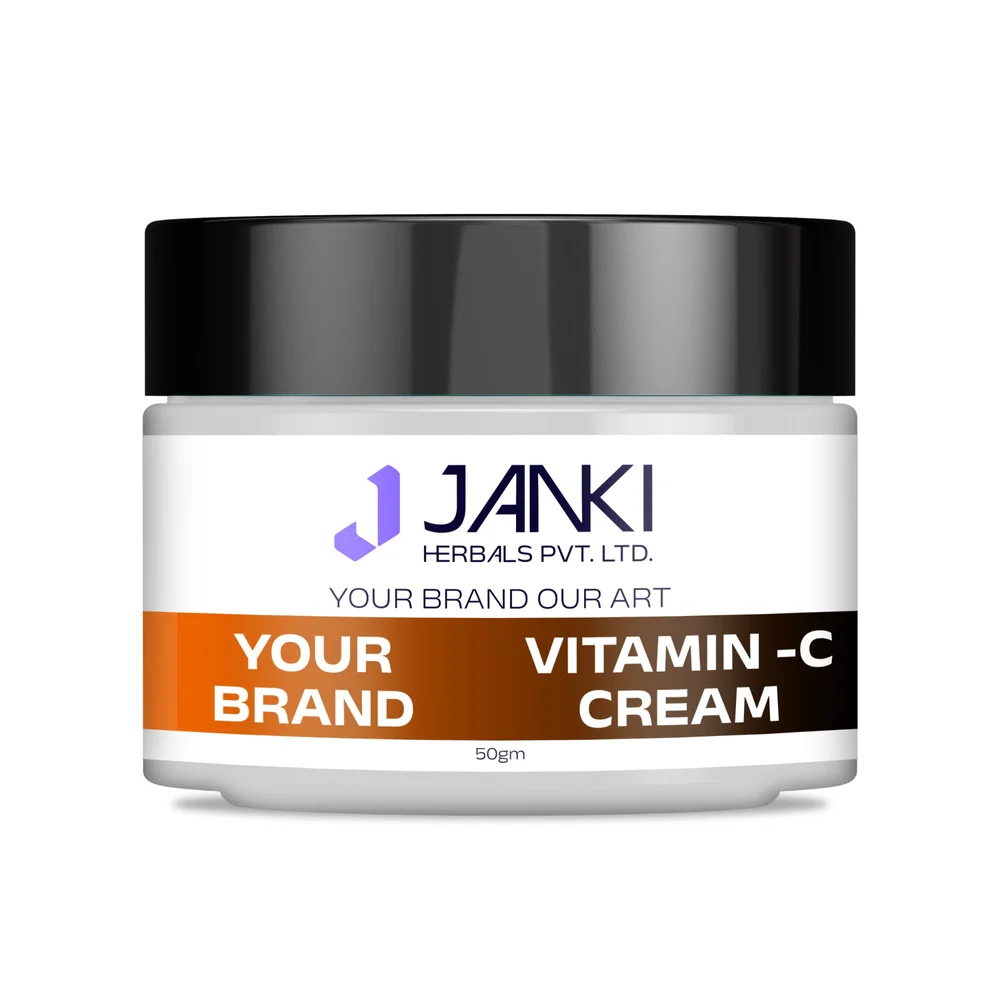
Vitamin C Face Cream, 50gm, 100gm, 200gm, 300gm, 500gm, 1000gm
₹30.0
| Packaging Size |
50gm, 100gm, 200gm, 300gm, 500gm, 1000gm
|
| Skin Type |
All Skin Types
|
| Gender |
Unisex
|
| Form |
Cream
|
| Type |
Skin Cream
|
| Packaging Type |
Cream Jar
|
| Brand |
Your Brand
|
| Shelf Life |
36 Months
|
| Paraben Free |
Yes
|
| Usage/Application |
Skin Care
|
| Fragrance |
Vitamin C
|
| Ingredient |
Herbal
|
| Container Type |
Jar
|
| Freckle Removal |
Yes
|
| Dark Sport Removal |
Yes
|
| Ideal Usage |
Men & Women
|
| Organic |
Yes
|
| Application Area |
Face & Body
|
| Ingredients |
Herbal
|
| Country of Origin |
Made in India
|

| Packaging Size |
50gm, 100gm, 200gm, 300gm, 500gm, 1000gm
|
| Skin Type |
All Skin Types
|
| Gender |
Unisex
|
| Form |
Cream
|
| Type |
Skin Cream
|
| Packaging Type |
Cream Jar
|
| Brand |
Your Brand
|
| Shelf Life |
36 Months
|
| Paraben Free |
Yes
|
| Usage/Application |
Skin Care
|
| Fragrance |
Vitamin C
|
| Ingredient |
Herbal
|
| Container Type |
Jar
|
| Freckle Removal |
Yes
|
| Dark Sport Removal |
Yes
|
| Ideal Usage |
Men & Women
|
| Organic |
Yes
|
| Application Area |
Face & Body
|
| Ingredients |
Herbal
|
| Country of Origin |
Made in India
|
You must be logged in to post a review.
Q & A
Sustainability Scientific Report: Vitamin C Face Cream
1. Introduction
Vitamin C (ascorbic acid) is widely used in dermatology for its antioxidant, anti-aging, and skin-brightening properties. However, sustainability concerns have emerged regarding the sourcing of raw materials, production methods, packaging, and post-consumer waste. This report evaluates the sustainability of Vitamin C face cream from a life cycle assessment (LCA) perspective, provides scientific calculations of carbon emissions, and suggests improvements.
2. Ingredients and Their Sustainability Impact
Key Ingredients in Vitamin C Face Cream:
| Ingredient | Source | Sustainability Concerns |
|---|---|---|
| Ascorbic Acid | Synthetic or Natural (citrus, corn) | Energy-intensive synthesis, sourcing impact |
| Water | Municipal or distilled | Water use and processing |
| Emulsifiers | Synthetic or natural oils | Bioaccumulation, biodegradability |
| Preservatives | Parabens or phenoxyethanol | Potential endocrine disruption |
| Packaging | Plastic, glass, or aluminum | Recyclability, energy to produce |
3. Life Cycle Assessment (LCA)
Scope:
-
Raw material extraction
-
Manufacturing
-
Packaging
-
Transportation
-
Consumer use
-
Disposal
Functional Unit:
-
1 unit (50 mL) of Vitamin C face cream
4. Scientific Calculations: Carbon Footprint
Assumptions:
-
50 mL cream
-
PET plastic packaging
-
Synthetic ascorbic acid (0.5 g per unit)
-
Data based on ecoinvent LCA database and literature
Emissions by Component (per 50 mL)
| Stage | CO₂e Emissions (g) |
|---|---|
| Ascorbic Acid (0.5 g) | 20 |
| Emulsifiers & Base Oils | 15 |
| Water | 1 |
| Packaging (PET bottle) | 80 |
| Transportation (local) | 30 |
| Manufacturing energy | 25 |
| Total | 171 g CO₂e |
Note: Using recycled plastic or biodegradable packaging can reduce the packaging impact by up to 60%.
5. Environmental and Health Considerations
Biodegradability:
-
Many preservatives and synthetic emulsifiers are not fully biodegradable.
-
Microplastic contamination is also a concern if exfoliating particles are added.
Skin Absorption and Ecotoxicity:
-
Low systemic absorption of ascorbic acid.
-
Ingredients washed off during use may enter wastewater systems.
6. Recommendations for Sustainable Practices
| Area | Recommendation |
|---|---|
| Ingredient Sourcing | Use L-ascorbic acid from natural fermentation |
| Packaging | Switch to glass or biodegradable materials |
| Manufacturing | Use renewable energy sources |
| Transportation | Optimize supply chain for lower emissions |
| Consumer Education | Promote recycling and proper disposal |
7. Conclusion
Vitamin C face cream has a moderate environmental footprint, primarily due to packaging and synthetic ingredient processing. However, through responsible sourcing, packaging redesign, and cleaner production methods, its sustainability profile can be greatly improved.
8. References
-
Schönborn, H. M., et al. (2020). Life Cycle Assessment of Cosmetic Products: Case Study on Moisturizers. Int J Life Cycle Assess.
-
Albrecht, S., et al. (2019). Environmental Sustainability of Synthetic vs. Natural Ingredients in Cosmetics. Environmental Impact Assessment Review.
-
Ecoinvent Database v3.8. (2024). Swiss Centre for Life Cycle Inventories.
-
Cosmetic Ingredient Review (CIR) Panel. (2021). Safety Assessment of Ascorbic Acid and Its Salts. CIR Final Report.
-
ISO 14040:2006 – Environmental Management: Life Cycle Assessment – Principles and Framework.
General Inquiries
There are no inquiries yet.
Reviews
There are no reviews yet.