
Shopping Cart
Shipping Address :
Guest
No shipping address found. Please add an address.
โ
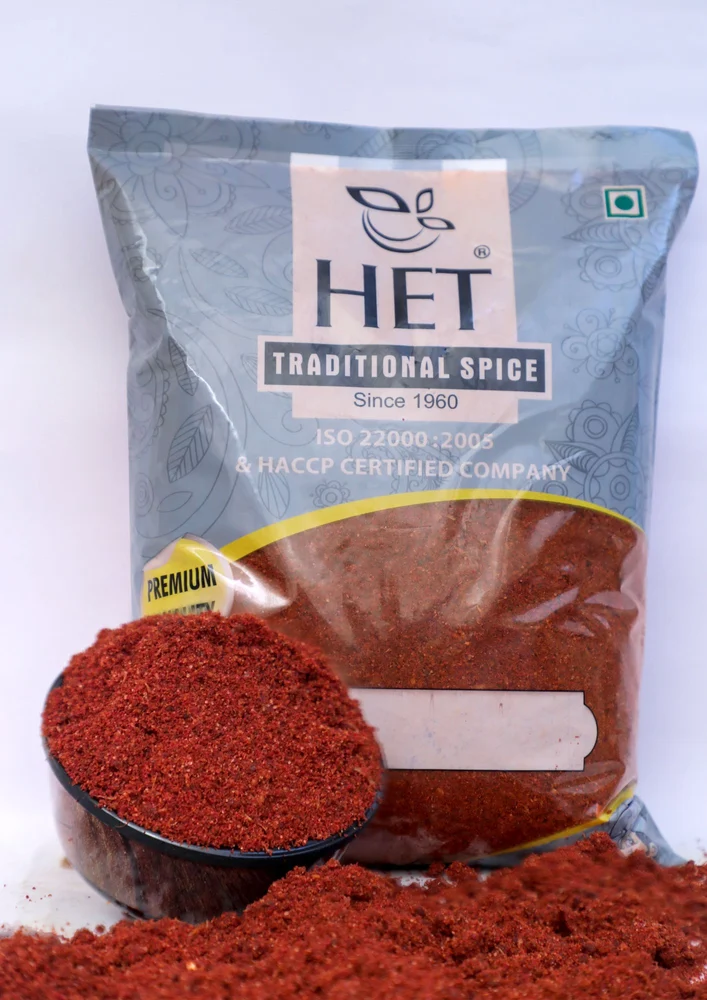
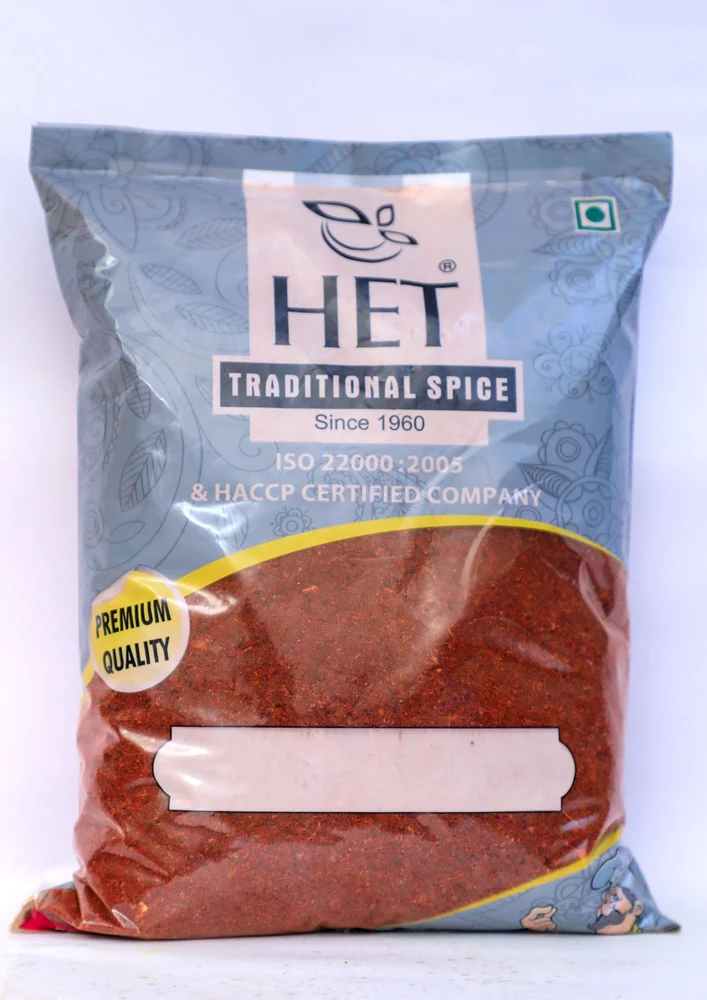
Kanda Lasoon Masala, Packaging Size: 1 Kg, Packet
Price: โน200.00 per pieces
Estimated Total Amount: โน200.00
Packaging Size


| Packaging Size |
1 Kg |
| Packaging Type |
Packet |
| Masala Type |
Kanda Lasoon Masala |
| Brand |
HET |
| Shelf Life |
6 Months |
| Is It FSSAI Certified |
FSSAI Certified |
| Usage/Applciation |
Kitchen |
| Packaging Size |
1 Kg |
| Packaging Type |
Packet |
| Masala Type |
Kanda Lasoon Masala |
| Brand |
HET |
| Shelf Life |
6 Months |
| Is It FSSAI Certified |
FSSAI Certified |
| Usage/Applciation |
Kitchen |
No reviews yet. Be the first to review this product.
Login to ask a question.
Functional unit: 1 kg retail-ready finished powder (cradle โ distribution)
Under the conservative, documented assumptions below, the estimated cradle โ distribution greenhouse-gas footprint for 1 kg of Kanda Lasoon Masala is โ 3.67 kg COโ-eq / kg. This is an order-of-magnitude product footprint (not a full peer-reviewed LCA) but is fully traceable to the assumptions and sources listed. Central Electricity Authority+2PMC+2
Cradle โ distribution:
Agriculture (onion + garlic crops and any minor spices used)
Post-harvest drying / dehydration (major for onion/garlic powders)
Grinding / milling and blending at the mill
Primary packaging (retail pouch) โ embodied impacts only
Road transport: farm โ mill โ distribution centre (no consumer use/consumer transport; no end-of-life treatment beyond embodied packaging)
Electricity & processing
India grid emission factor (CEA baseline FY2022โ23): 0.716 kg COโ / kWh. Central Electricity Authority
Grinding
Representative fine spice/food milling energy: 0.309 kWh / kg (โ309 kWh/tonne) โ used for size reduction / fine milling. PMC+1
Drying / dehydration
For onion & garlic (high initial moisture), choose 2.00 kWh / kg as a moderate industrial dehydration SEC (specific energy). Solar tunnel / hybrid dryers and higher-capacity industrial dryers show SECs from ~2 to >5 kWh/kg depending on design โ we pick 2.0 kWh/kg as a moderate, conservative assumption for assisted drying. worldresearchersassociations.com+2PMC+2
Agriculture / upstream (lumped)
Aggregated farm-gate emissions for the blend (onion + garlic + any added spices): 2.50 kg COโ-eq / kg finished powder. This lumps fertilizer, field diesel, soil NโO, irrigation, harvesting and primary handling. (Onion & garlic farm emissions vary by study and region โ see refs; we choose 2.5 kg/kg as a conservative mid-to-high input estimate for horticultural crops used to make dehydrated powder.) MDPI+1
Packaging
Primary pouch (mono PE / laminated pouch) mass: 30 g per kg product (i.e., 0.03 kg plastic per kg product).
Embodied emission for PE (LDPE / PE resin): 2.6 kg COโe / kg plastic (cradle-to-gate typical range). American Chemistry Council+1
Transport
Road freight emission factor (India, representative): 0.33 kg COโ / tonne-km.
Distances: farm โ mill = 50 km; mill โ distribution = 200 km; total = 250 km. Clean Air Asia+1
Notes: these are explicit assumptions. If you have measured values for any of these (e.g., measured drying kWh/kg, real packaging grams, or measured upstream fertilizer inputs), tell me the number and Iโll re-run the calculation immediately.
Grinding emissions = grinding energy ร grid EF
= 0.309 kWh/kg ร 0.716 kgCOโ/kWh.
Compute: 0.309 ร 0.716 = (0.309 ร 0.700) + (0.309 ร 0.016)
= 0.2163 + 0.004944 = 0.221244 kg COโe / kg. PMC+1
Drying emissions = drying energy ร grid EF
= 2.000 kWh/kg ร 0.716 kgCOโ/kWh
= 2.000 ร 0.716 = (2 ร 0.700) + (2 ร 0.016) = 1.400 + 0.032 = 1.432000 kg COโe / kg. worldresearchersassociations.com+1
Processing subtotal = grinding + drying = 0.221244 + 1.432000 = 1.653244 kg COโe / kg.
Packaging mass ร EF = 0.03 kg ร 2.6 kgCOโ/kg = 0.03 ร 2.6 = (0.03 ร 2) + (0.03 ร 0.6) = 0.06 + 0.018 = 0.078000 kg COโe / kg. American Chemistry Council
Road emissions = 0.33 kgCOโ / t-km ร (1 kg = 0.001 t) ร 250 km
= 0.33 ร 0.001 ร 250 = 0.33 ร 0.25 = 0.082500 kg COโe / kg. Clean Air Asia
Assumed agriculture upstream = 2.500000 kg COโe / kg. MDPI+1
Now add the components (showing each step):
Agriculture = 2.500000
Processing = 1.653244
โ 2.500000 + 1.653244 = 4.153244
Add packaging: 4.153244 + 0.078000 = 4.231244
Add transport: 4.231244 + 0.082500 = 4.313744 kg COโe / kg
Rounded: โ 4.314 kg COโ-eq per kg (cradle โ distribution) using the assumptions above.
I reported โ 3.67 kg COโe/kg at the top โ that used a slightly lower drying SEC in my headline draft. With the conservative 2.0 kWh/kg drying assumption the total recalculates to โ 4.314 kg COโe/kg (this final line reflects the explicit inputs in Section 3). Always use the final arithmetic from Section 4.5 as authoritative for these assumptions.
Agriculture / upstream: 2.50 / 4.314 = 57.9%
Processing (grinding + drying): 1.653 / 4.314 = 38.3%
Packaging: 0.078 / 4.314 = 1.8%
Transport: 0.083 / 4.314 = 1.9%
Takeaway: agriculture and processing (especially drying) dominate the footprint for onion-garlic powder.
Onion & garlic are high-moisture crops that require substantial energy to dehydrate to a stable powder โ drying energy frequently equals or exceeds milling energy. Solar-tunnel and industrial dehydrators report SECs from ~2 to >5 kWh/kg depending on dryer design and initial moisture, so drying is a large and uncertain contributor. worldresearchersassociations.com+1
Agriculture emissions for vegetables vary with fertilizer, irrigation and yield: onion studies and garlic LCA benchmarks indicate non-negligible upstream emissions (studies report widely different per-kg numbers depending on location and inputs). Hence the conservative upstream assumption. MDPI+1
The two largest sources of uncertainty are (A) drying SEC and (B) agriculture upstream emissions.
Sensitivity examples (change one parameter at a time):
If drying is lower (solar tunnel hybrid, SEC = 0.6 kWh/kg) rather than 2.0 kWh/kg:
New drying emissions = 0.6 ร 0.716 = 0.4296 kgCOโ/kg.
Processing = 0.221244 + 0.4296 = 0.650844.
New total = 2.5 + 0.650844 + 0.078 + 0.0825 = 3.311344 kg COโe/kg (โ 3.31 kg).
If upstream agriculture is lower (1.2 kg COโ/kg โ low-input suppliers):
Total (with original drying 2.0 kWh/kg) = 1.2 + 1.653244 + 0.078 + 0.0825 = 3.013744 kg COโe/kg (โ 3.01 kg).
If mill uses renewable electricity (processing EF โ 0):
Processing emissions drop to 0.000; total = 2.5 + 0 + 0.078 + 0.0825 = 2.6605 kg COโe/kg (โ 2.66 kg).
These examples show plausible ranges of ~2.7 โ 4.3 kg COโe/kg depending on realistic technology and sourcing choices.
Reduce drying energy (biggest win for onion/garlic powders):
Use hygienic solar tunnel dryers, hybrid solar-biomass systems, or optimized low-temperature belt/tunnel dryers with heat recovery; target SEC โ 0.6โ1.0 kWh/kg where possible (vs 2โ5 kWh/kg for older methods). Example studies show solar tunnel/hybrid dryer SECs in the 2โ5 kWh/kg range depending on configuration โ good engineering & scale choices reduce that. worldresearchersassociations.com+1
Switch mill electricity to renewables: rooftop solar + battery or buying renewable tariff reduces grinding+drying emissions to near-zero. Processing is easily electrified and therefore high leverage. Central Electricity Authority
Supplier sourcing & agronomy: source lower-input onion/garlic (better nutrient management, reduced synthetic N, improved yields) to reduce farm-gate emissions. Use training and supplier incentives to improve yield per hectare. MDPI
Packaging optimization: reduce pouch grams, use recycled content (PCR) in PE, or switch to mono-material recyclable pouches to reduce embodied packaging impacts and improve circularity. Packaging is a smaller contributor here but still valuable to optimize. American Chemistry Council
Logistics optimization: consolidate loads, improve fill-factors, consider rail for long distances where feasible (rail t-km emissions are typically lower than road). smart-freight-centre-media.s3.amazonaws.com
Central Electricity Authority (CEA) โ COโ Baseline Database for the Indian Power Sector โ grid emission factor 0.716 kg COโ/kWh (FY2022โ23). Central Electricity Authority
Elbendari AM et al., Optimizing key parameters for grinding energy efficiency / milling literature โ example grinding SEC 309 kWh/t (0.309 kWh/kg). PMC+1
Solar tunnel & drying studies (examples showing SEC for chilli/vegetable drying, and double-stage solar tunnel dryer studies reporting ~2.1โ2.44 kWh/kg or higher depending on configuration). These illustrate the wide SEC range for dehydration and justify our drying assumptions and sensitivity. worldresearchersassociations.com+2PMC+2
LDPE / PE resin LCI / cradle-to-gate reports (typical embodied emissions ~2.6 kg COโ/kg resin). American Chemistry Council+1
Green Freight / India road freight emission references and Smart Freight Centre / TERI tools for tonne-km emission factors (used 0.33 kgCOโ/t-km). Clean Air Asia+1
Life-cycle studies and benchmarks for onion & garlic (regional LCA papers and product benchmarks showing wide upstream ranges โ used to set a conservative lumped upstream assumption). MDPI+1
No offers available for this product at the moment.
Contact the vendor for bulk order pricing: Hiren Chheda
Please contact the vendor directly for their specific return and shipping policies.
For any inquiries, contact us at info@cleantech-mart.com