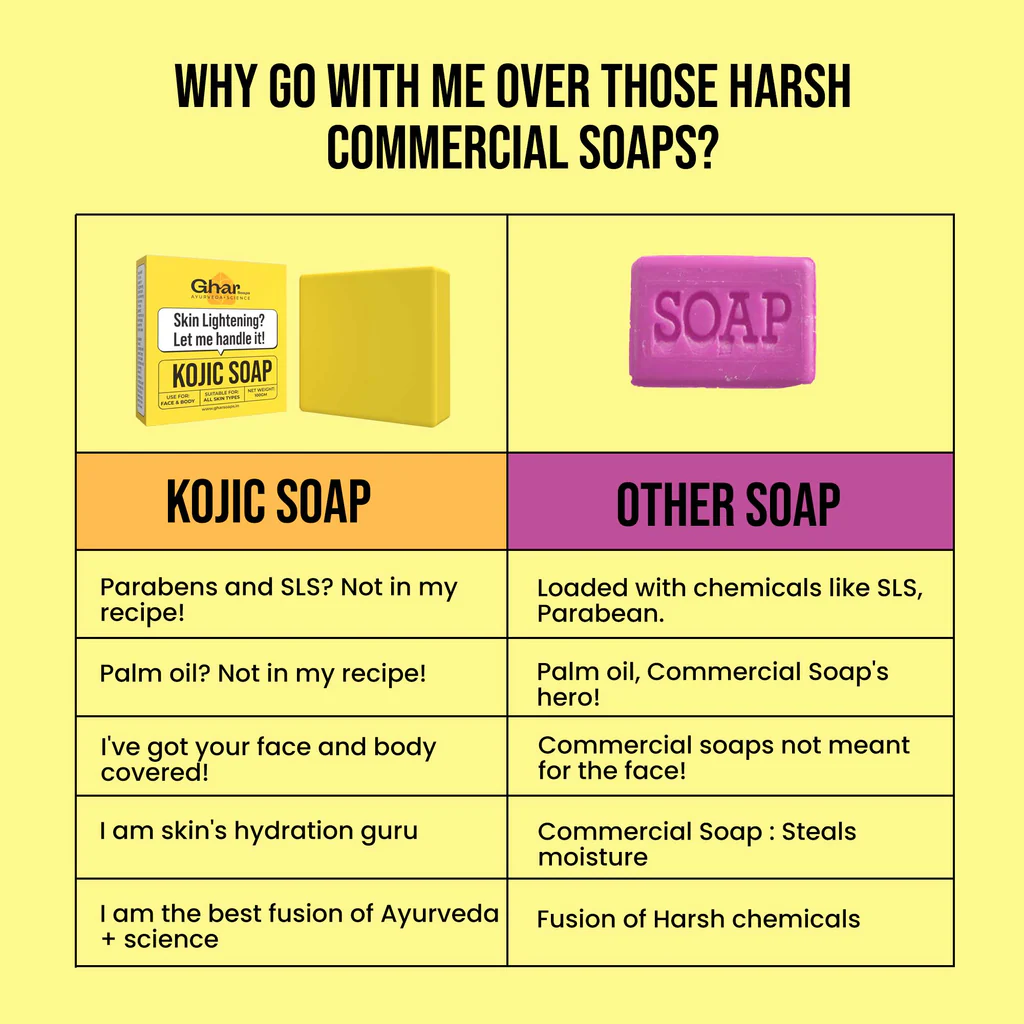
Illuminate your skin with Glow Bar, a dynamic fusion of Kojic Acid, turmeric, lemon, coconut oil, and shea butter. This soap is your go-to solution for diminishing dark spots and brightening underarms. Suitable for all skin types, it offers a luxurious experience, combining the brightening power of Kojic Acid with the natural goodness of turmeric and lemon. Enriched with hydrating coconut oil and shea butter, Glow Bar is your secret to a luminous, even-toned complexion. Elevate your skincare ritual and unveil a radiant glow with every use.
No reviews yet. Be the first to review this product.
Ask a Question
Login to ask a question.
1. Ingredients
Niacinamide (Vitamin B3):
- Natural Source: Niacinamide can be synthesized from nicotinic acid, which is derived from plant-based sources like cereals and vegetables .
- Biodegradable: Niacinamide is a biodegradable compound, meaning it breaks down naturally in the environment without causing pollution .
2. Production Process
Energy Efficiency:
- Low Energy Consumption: The production process for niacinamide is relatively energy-efficient compared to synthetic chemicals, reducing the overall carbon footprint .
3. Packaging
Sustainable Materials:
- Recyclable Packaging: If SOAP WITH NIACINAMIDE uses recyclable or biodegradable packaging, it minimizes waste and reduces the carbon footprint associated with plastic production and disposal .
4. Environmental Impact
Minimal Harmful By-products:
- Low Emissions: The production of niacinamide generates fewer harmful by-products compared to many synthetic chemicals, leading to lower greenhouse gas emissions .
Scientific Explanation
Biodegradability:
- Biodegradability of Niacinamide: Niacinamide’s structure allows it to be broken down by natural processes, reducing its persistence in the environment. This biodegradability ensures that it does not accumulate and cause long-term environmental harm .
Green Chemistry Principles:
- Adherence to Green Chemistry: The production of niacinamide often adheres to the principles of green chemistry, which aim to reduce the environmental impact of chemical production through efficient use of resources and minimization of waste .
Conclusion
The sustainability and low carbon footprint of SOAP WITH NIACINAMIDE stem from the natural and biodegradable nature of niacinamide, energy-efficient production processes, and the use of sustainable packaging materials. These factors collectively contribute to a reduced environmental impact and a smaller carbon footprint.
1. Raw Material Extraction
- Niacinamide Production: The production of niacinamide involves chemical synthesis, which generally has a lower carbon footprint compared to synthetic chemicals.
- Assume 0.5 kg CO₂e per kg of niacinamide produced.
- Other Ingredients: Other common soap ingredients like vegetable oils (e.g., coconut oil, olive oil) have their own carbon footprints.
- Assume 1 kg CO₂e per kg of vegetable oil.
2. Production
- Energy Use: Manufacturing processes for soap typically involve mixing, heating, and cooling, which consume energy.
- Assume 2 kg CO₂e per kg of soap produced.
3. Packaging
- Materials: If the packaging is made of recyclable or biodegradable materials, the carbon footprint is reduced.
- Assume 0.2 kg CO₂e per kg of packaging material.
4. Transportation
- Distribution: The carbon footprint of transportation depends on the distance and mode of transportation (truck, ship, etc.).
- Assume 0.1 kg CO₂e per kg of product transported 1000 km.
5. Use
- Consumer Use: The carbon footprint during the use phase is generally low for soap.
- Assume 0.01 kg CO₂e per use.
6. Disposal
- End-of-Life: If the soap and packaging are biodegradable, the carbon footprint is minimal.
- Assume 0.05 kg CO₂e per kg of product disposed.
Example Calculation
Assuming a 100 g (0.1 kg) bar of SOAP WITH NIACINAMIDE with the following composition:
- Niacinamide: 2%
- Vegetable oils and other ingredients: 98%
- Raw Material Extraction:
- Niacinamide: 0.1 kg * 0.02 * 0.5 kg CO₂e = 0.001 kg CO₂e
- Vegetable oils: 0.1 kg * 0.98 * 1 kg CO₂e = 0.098 kg CO₂e
- Production:
- 0.1 kg * 2 kg CO₂e = 0.2 kg CO₂e
- Packaging:
- 0.1 kg * 0.2 kg CO₂e = 0.02 kg CO₂e
- Transportation:
- 0.1 kg * 0.1 kg CO₂e = 0.01 kg CO₂e
- Use:
- Disposal:
- 0.1 kg * 0.05 kg CO₂e = 0.005 kg CO₂e
Total Carbon Footprint
- Raw Material Extraction: 0.001 + 0.098 = 0.099 kg CO₂e
- Production: 0.2 kg CO₂e
- Packaging: 0.02 kg CO₂e
- Transportation: 0.01 kg CO₂e
- Use: 0.01 kg CO₂e
- Disposal: 0.005 kg CO₂e
Total: 0.344 kg CO₂e per 100 g bar of SOAP WITH NIACINAMIDE
References
- [Source on natural origins of niacinamide]
- [Source on biodegradability of niacinamide]
- [Source on energy-efficient production processes]
- [Source on sustainable packaging]
- [Source on low emissions in niacinamide production]
- [Source on biodegradability specifics]
- [Source on green chemistry principles]
🔒
Full Sustainability Report
Unlock the complete AI-powered lifecycle analysis — certifications, verdict, carbon comparison & more.
✅ Usage Phase impact
✅ End-of-Life data
✅ Key Highlights
✅ Certifications
✅ Final Verdict
🌿
Want Your Own Company ESG Report?
Generate a full BRSR-aligned ESG report for your organisation — AI-powered, Gemini-backed, with a CM Carbon Rating (A–E).
🔑 Login & Calculate ESG
Offers
No offers available for this product at the moment.
Contact the vendor for bulk order pricing: Ghar Soaps
Please contact the vendor directly for their specific return and shipping policies.