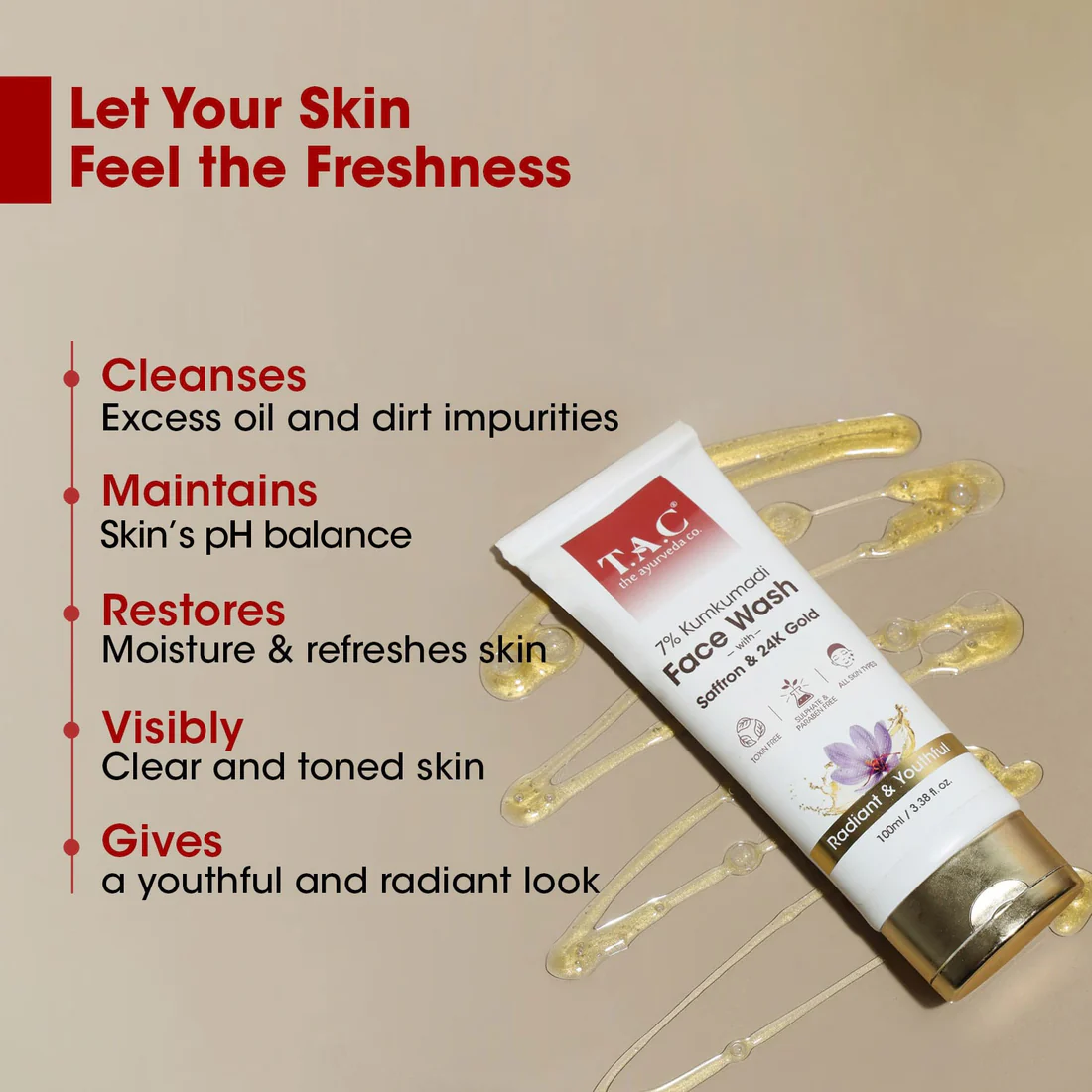
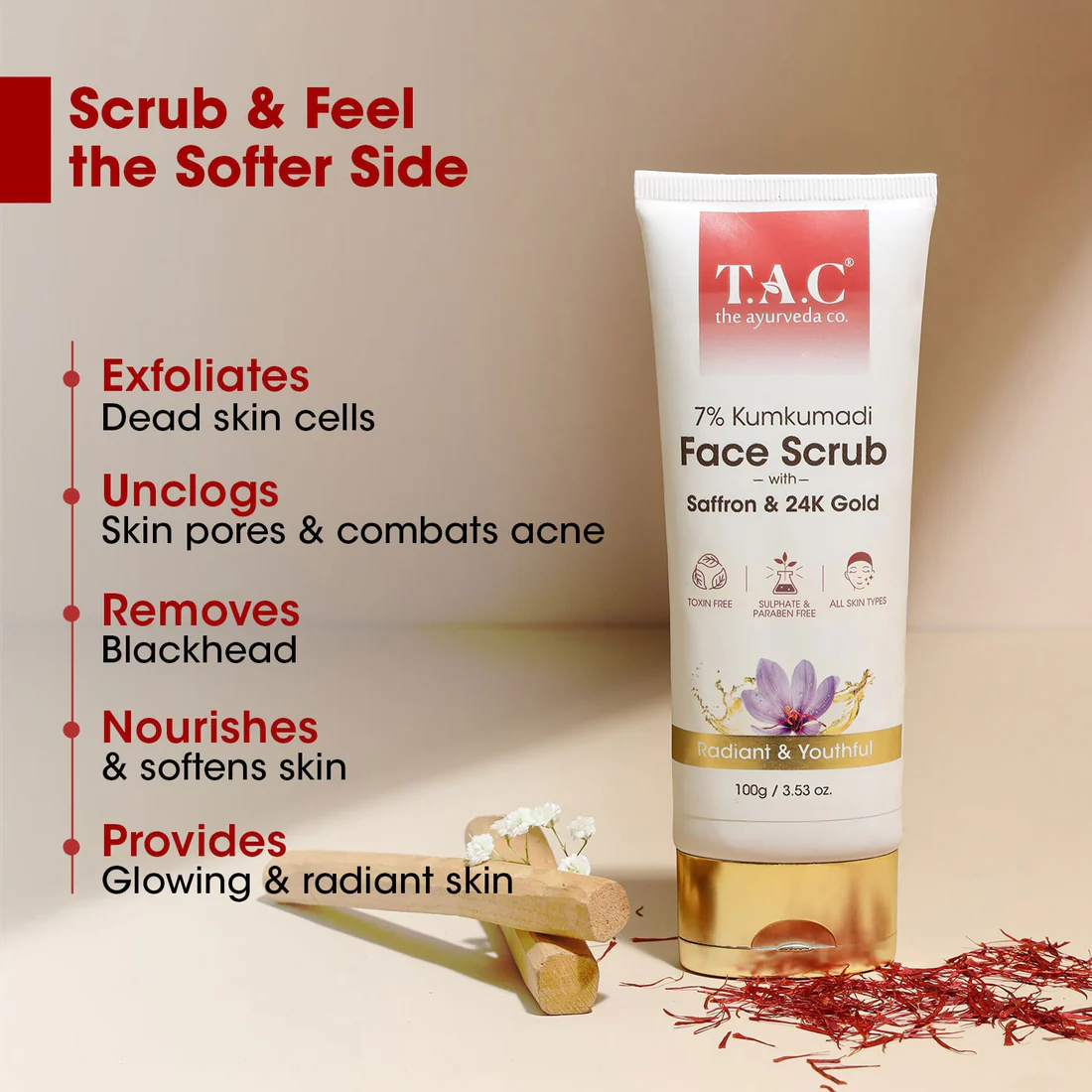
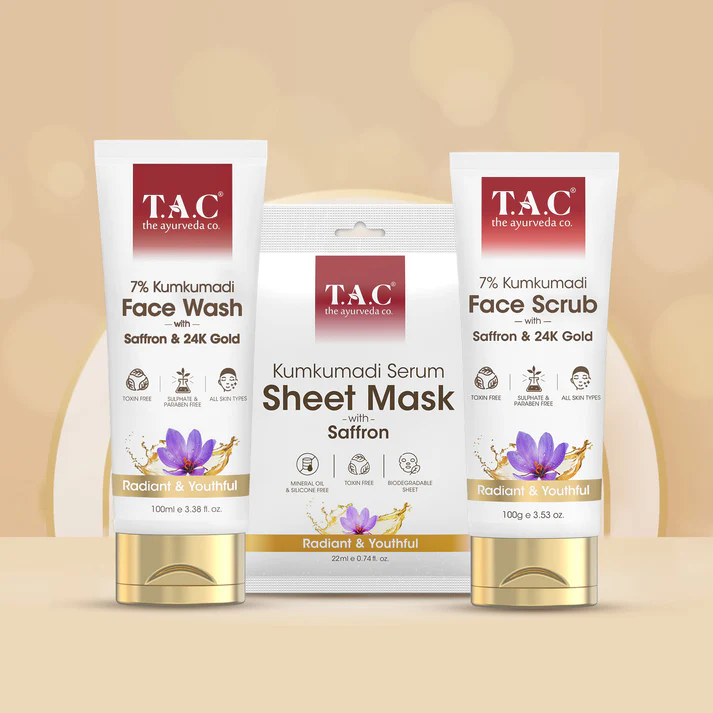
Elevate your skincare with our Kumkumadi Festive Glow Kit. Enriched with 24K Gold Dust, these products cleanse, exfoliate, and rejuvenate your skin, offering a golden glow, toned pores, and youthful texture. Experience Ayurveda's magic in one package.
• Cleanse your skin with the Kumkumadi Face Wash, revealing a smooth, golden glow.
• Exfoliate gently with the Kumkumadi Face Scrub, leaving your skin visibly toned, smooth, and radiant.
• The Kumkumadi Sheet Mask is a quick indulgence designed to instantly transform and illuminate your skin.
No reviews yet. Be the first to review this product.
Ask a Question
Login to ask a question.
1. Ingredients Sourcing:
- Organic and Sustainable Ingredients: Products sourced from organic farming or sustainable sources reduce environmental impact compared to those reliant on conventional farming, which often involves higher carbon emissions and chemical use.
- Certifications: Look for certifications like USDA Organic, Fair Trade, or Rainforest Alliance that ensure sustainable sourcing practices.
2. Manufacturing Process:
- Energy Efficiency: Manufacturing processes that prioritize energy efficiency and use of renewable energy sources contribute to lower carbon footprints.
- Water Usage: Efficient water management during production minimizes resource depletion and environmental impact.
3. Packaging:
- Minimalist Packaging: Products with minimal or eco-friendly packaging (recycled materials, biodegradable packaging) reduce waste and carbon emissions associated with packaging production and disposal.
- Packaging Size and Weight: Smaller, lighter packaging reduces transportation emissions and energy use.
4. Product Use and Disposal:
- Biodegradability: Products that are biodegradable or compostable break down naturally, reducing landfill waste and associated emissions.
- Sustainable Formulation: Non-toxic, biodegradable formulations minimize environmental impact during use and disposal phases.
5. Lifecycle Analysis:
- Carbon Footprint Analysis: Products undergo lifecycle assessments (LCAs) to measure environmental impacts across their entire lifecycle—from raw material extraction to disposal. Lower carbon footprint products result from efficient use of resources and reduced emissions at each stage.
References:
- Environmental Impact of Cosmetics: According to a study by the European Commission, cosmetics' environmental impact varies significantly based on ingredients, packaging, and production methods. Sustainable practices aim to reduce this impact by using renewable resources and eco-friendly manufacturing processes.
- Lifecycle Assessments (LCAs): LCAs provide a comprehensive analysis of products' environmental impacts, including carbon emissions. They help identify areas for improvement in sustainability practices within the cosmetics industry.
🔒
Full Sustainability Report
Unlock the complete AI-powered lifecycle analysis — certifications, verdict, carbon comparison & more.
✅ Usage Phase impact
✅ End-of-Life data
✅ Key Highlights
✅ Certifications
✅ Final Verdict
🌿
Want Your Own Company ESG Report?
Generate a full BRSR-aligned ESG report for your organisation — AI-powered, Gemini-backed, with a CM Carbon Rating (A–E).
🔑 Login & Calculate ESG
Offers
No offers available for this product at the moment.
Contact the vendor for bulk order pricing: The Ayurveda Co.
Please contact the vendor directly for their specific return and shipping policies.