Millet Amma’s Organic Little Millet Rava | gluten free millets
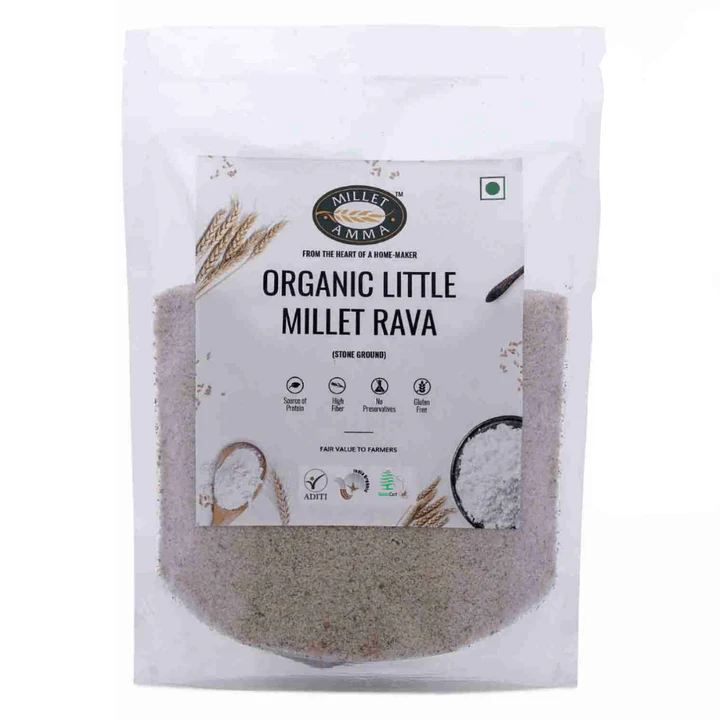
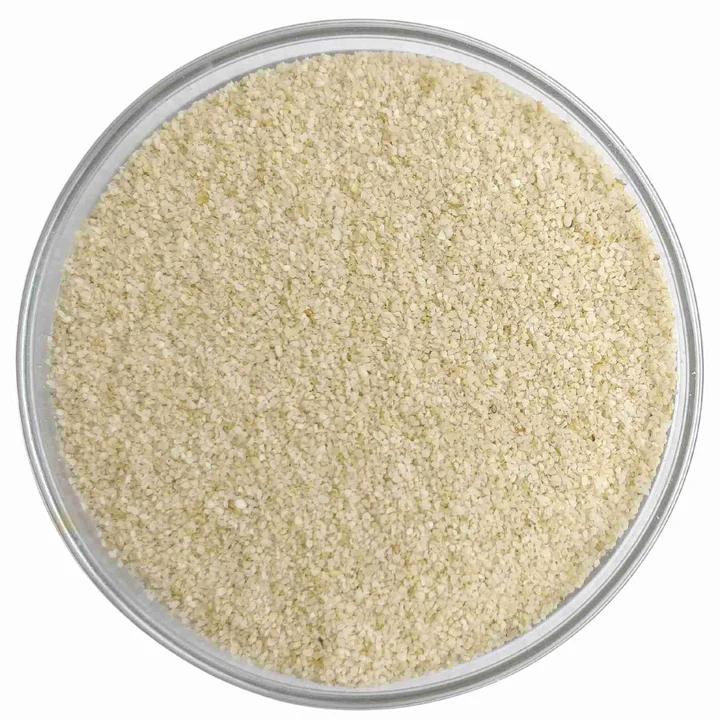
Millet Amma’s Organic Little Millet Rava is made with unpolished Little Millets.
Little millet is rich in minerals like iron, zinc and calcium and is also high in fiber and aids in weight management.
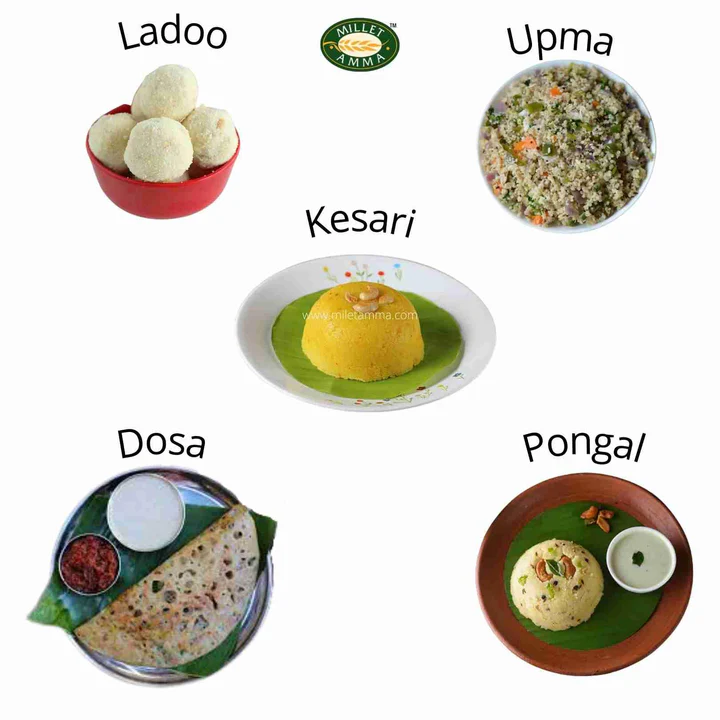
You can make a variety of gluten free dishes with our Little Millet rava like upma, kheer, porridge, crackers, rava dosa and idli.
You can also try our Ready to Cook Organic Pizza Base that is made from Little Millet.
The millet cultivated is 100% Organic and suitable for a gluten free diet.
Enjoy your favourite dishes with this Organic Little Millet Rava made with love from the heart of a home-maker.
Content
- Unpolished Little Millet Rava
How to store?
Store your favourite Organic Little Millet Rava in an airtight tin in a cool and dry place for 6 months.
Net Weight: 500gm
No reviews yet. Be the first to review this product.
Ask a Question
Login to ask a question.
Millet rava, also known as millet semolina or millet flour, offers several sustainability advantages compared to conventional grains like wheat or rice. Here are some reasons why millet rava is considered sustainable with a low carbon footprint:
1. Water Efficiency: Millets are inherently more water-efficient compared to major cereal crops like rice. They require significantly less water to grow and thrive in semi-arid and drought-prone regions where other crops might struggle. For example, finger millet (ragi) and pearl millet have been noted for their ability to grow with minimal irrigation, making them suitable for regions facing water scarcity (FAO, 2020).
2. Climate Resilience: Millets are resilient to climate variability and can withstand high temperatures as well as low-input farming practices. They are less sensitive to temperature changes and have a shorter growing period, which reduces exposure to adverse weather conditions (FAO, 2010).
3. Biodiversity and Soil Health: Cultivating millets promotes biodiversity and enhances soil health. Millet farming typically involves traditional agricultural practices that can improve soil fertility and reduce the need for synthetic fertilizers and pesticides (FAO, 2020).
4. Low Carbon Footprint: The cultivation of millets generally results in lower greenhouse gas emissions compared to more intensive cereal crops like rice and wheat. This is due to their lower water and fertilizer requirements, reduced methane emissions from paddies, and less energy-intensive processing (FAO, 2010).
5. Nutritional Benefits: Millets are nutritious, rich in fiber, minerals, and essential nutrients. Incorporating millet rava into diets can contribute to food security and improve nutrition in regions where malnutrition is prevalent (FAO, 2010).
References:
- Food and Agriculture Organization (FAO). (2010). Millets: Nutritional composition, health benefits and utilization in developing countries. Retrieved from http://www.fao.org/3/i2490e/i2490e00.htm
- Food and Agriculture Organization (FAO). (2020). Millets: Facts and opportunities. Retrieved from http://www.fao.org/3/ca9112en/ca9112en.pdf
In summary, millet rava products are sustainable due to their lower water footprint, climate resilience, positive impact on soil health, and overall lower carbon emissions throughout their lifecycle compared to other grains. These factors make them an environmentally friendly choice in agriculture and food production.
🔒
Full Sustainability Report
Unlock the complete AI-powered lifecycle analysis — certifications, verdict, carbon comparison & more.
✅ Usage Phase impact
✅ End-of-Life data
✅ Key Highlights
✅ Certifications
✅ Final Verdict
🌿
Want Your Own Company ESG Report?
Generate a full BRSR-aligned ESG report for your organisation — AI-powered, Gemini-backed, with a CM Carbon Rating (A–E).
🔑 Login & Calculate ESG
Offers
No offers available for this product at the moment.
Contact the vendor for bulk order pricing: Millet Amma
Please contact the vendor directly for their specific return and shipping policies.