SKU
CTMOPONNC12
Minimum Order
1 pieces
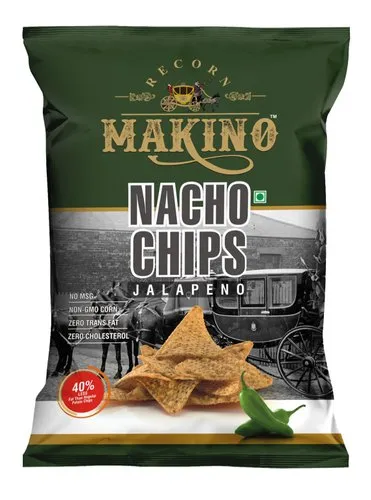
Nachos Jalapeno Chips
Brand Makino
Packaging Size 60 Gms
Flavour Jalapeno
Food Grade Corn
Shelf Life 6 Months
Country of Origin Made in India
ISO Certiffied 2200:2005
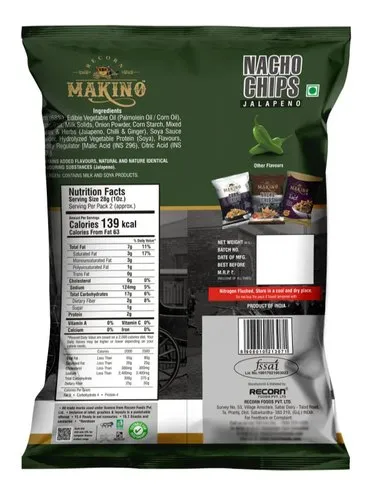
Calories 139 Kcal
Ingredients Edible Vegetable Oil(Palmolein Oil/ Corn Oil, Milk Solids Onion Powder , Corn Strach . Mixed ,Soya S
Serving Size 28 g
Calories From Fat 63
Saturated Fat 3 g
Monounsaturated Fat 3 g
Polyunsaturated Fat 1 g
Trans Fat 0 g
Cholesterol 0 g
Sodium 124 mg
Total Carbohydrates 17 kg
Dietary Fiber 2 g
Sugar 1 g
Protein 2 g
Vitamin A And C 0%
Calcium 0%
Iron 0%
Calories Per-
Fat Gram 9 Gram
Carbohydrates 4 Gram
Protein 4 Gram
The sizzling taste of Jalapeno will give you a fine dining atmosphere; indulge with the goodness of healthy corn.
Nachos Jalapeno Chips- Organic Products Definition
Beyond the remarkable environmental benefits, organic farming contributes to healthier and more nutritious food. Studies have shown that organically grown fruits and vegetables often contain higher levels of essential vitamins, minerals, and antioxidants compared to their conventionally grown counterparts. This heightened nutritional value not only benefits consumers but also supports the overall well-being of the planet.
Additionally, the commitment to organic farming extends to the ethical treatment of livestock. Animals raised for organic meat, dairy, and egg production are provided with more humane living conditions. They are granted access to outdoor spaces and are fed organic diets free from synthetic additives and genetically modified organisms. This humane treatment of animals not only aligns with principles of compassion but also leads to the production of healthier, more sustainable animal products.
An integral part of the organic approach is the responsible use of resources. Organic farming practices emphasize water conservation, as they often employ efficient irrigation methods and water-saving techniques. By minimizing water usage and reducing soil erosion, organic agriculture promotes soil health and preserves valuable natural resources.
Energy efficiency is another key consideration in organic farming. This may involve reducing energy consumption in the production and transportation of organic products. Sustainable practices, such as crop rotation and reduced reliance on synthetic inputs, can also contribute to energy savings.
It's worth noting that organic farming is a holistic approach that considers the entire lifecycle of agricultural products. This includes sustainable packaging and distribution methods, reducing waste, minimizing the carbon footprint associated with the transportation of organic goods.
The final and crucial step in the organic product journey is certification. Organic products must undergo a rigorous certification process to validate their compliance with organic standards. Government agencies or accredited third-party organizations conduct these assessments, ensuring transparency and trust for consumers seeking organic choices.
No reviews yet. Be the first to review this product.
Ask a Question
Login to ask a question.
Organic agriculture typically relies less on energy-intensive synthetic inputs, reducing the overall energy footprint of food production.
Organic farms often provide more diverse and pesticide-free habitats, benefiting bees and other pollinators crucial for food production and ecosystem health.
The absence of chemical runoff from organic farms helps maintain cleaner waterways, benefiting aquatic life and reducing the impact on downstream ecosystems.
Overall, by supporting organic food production, consumers can actively contribute to a more sustainable and environmentally friendly food system. However, it's essential to note that the environmental benefits of organic agriculture can vary depending on factors such as farm management practices and location.
🔒
Full Sustainability Report
Unlock the complete AI-powered lifecycle analysis — certifications, verdict, carbon comparison & more.
✅ Usage Phase impact
✅ End-of-Life data
✅ Key Highlights
✅ Certifications
✅ Final Verdict
🌿
Want Your Own Company ESG Report?
Generate a full BRSR-aligned ESG report for your organisation — AI-powered, Gemini-backed, with a CM Carbon Rating (A–E).
🔑 Login & Calculate ESG
Offers
No offers available for this product at the moment.
Contact the vendor for bulk order pricing: RecornFoods
Please contact the vendor directly for their specific return and shipping policies.