Minimum Order
1000 pieces
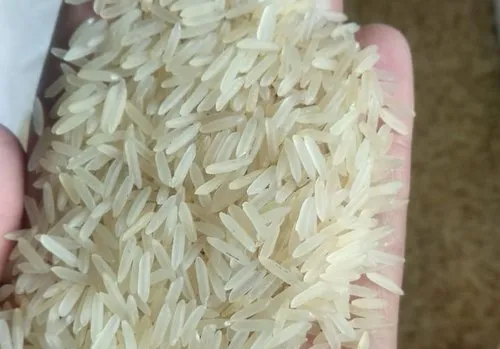
Premium Sella Basmati Rice:
Rice, a staple food for nearly half of the world's population, holds a paramount position in global agriculture. Cultivated in diverse climates, it serves as a primary source of nutrition, livelihood, and economic stability for millions.
In Asia, where rice cultivation originated, the lush fields of paddy crops sway with abundance. The meticulous planting and nurturing of rice paddies reflect the dedication of farmers who strive to meet the burgeoning demand for this essential grain.
Transitioning to its cultivation process, farmers begin by plowing the fields, creating a receptive bed for the rice seeds. Subsequently, water inundation becomes integral, mirroring the rice plant's natural habitat and fostering optimal growth. This inundation technique, known as "flooding," remains a time-honored method employed by rice cultivators globally.
As the rice plants mature, the fields transform into a sea of verdant green, promising a bountiful harvest. The diligent farmers then harvest the rice stalks with precision, ensuring the culmination of their hard work results in a quality yield. Mechanical harvesters have become increasingly prevalent, enhancing efficiency and minimizing labor-intensive efforts.
Premium Sella Basmati Rice: Post-harvest, the rice undergoes milling to remove husks and bran, refining it to its consumable form. This process is a pivotal link in the rice production chain, ensuring that the final product meets quality standards for distribution and consumption.
In conclusion, rice cultivation embodies a harmonious interplay of nature and human effort, sustaining populations worldwide. From the flooded fields to the milling process, each stage requires skill and dedication, marking rice as not just a crop but a symbol of sustenance, community, and global interconnectedness.
No reviews yet. Be the first to review this product.
Ask a Question
Login to ask a question.
Sustainability Score
5/10
Carbon Footprint
Medium
Low-Carbon Lifestyle Fit
Fair
Sella Basmati Rice's primary raw material is the rice grain itself, cultivated through water-intensive methods. Manufacturing involves milling and processing, typically powered by conventional electricity or biomass, contributing to emissions. The product has a relatively long shelf life when stored correctly, minimizing waste. End-of-life disposal is generally through consumption, with any food waste ideally composted.
| Lifecycle Stage | Impact | Notes |
|---|
| Raw Materials | high | Rice cultivation, especially paddy rice, is a significant source of methane emissions and requires substantial water resources. |
| Manufacturing | medium | Milling and processing consume energy, often from fossil fuels, and generate some waste byproducts like rice husk. |
| Packaging | low | The 25 kg bag is likely made from polypropylene, which is recyclable in some regions but often ends up in landfills. |
| Transportation | medium | Transport from farm to mill, and then to distribution centers and end-users, contributes to emissions depending on distance and mode. |
| Usage Phase | minimal | No direct energy consumption during usage; impact is primarily from cooking, which is not part of the product's direct lifecycle. |
| End-of-Life | low | Primarily consumed as food; packaging can be recycled where facilities exist, otherwise contributes to landfill waste. |
🌟 Key Highlights
- As a staple food, rice offers high nutritional density per unit of land, contributing to food security.
- Basmati rice cultivation supports millions of smallholder farmers in India, providing significant economic livelihood.
- Potential for valorization of rice by-products (e.g., rice husk for bioenergy or animal feed) can reduce overall waste.
⚠️ Areas for Improvement
- Reducing methane emissions from paddy fields through alternative wetting and drying (AWD) techniques is crucial.
- Optimizing water usage in cultivation and exploring drought-resistant varieties could significantly lower environmental impact.
📋 Relevant Certifications & Standards
For agricultural products like Sella Basmati Rice, relevant certifications include India Organic, Jaivik Bharat (for organic variants), GLOBALG.A.P. (for sustainable farming practices), and potentially Fairtrade if sourcing from specific communities. ISO 14001 for environmental management of processing facilities is also applicable.
Recommended For: Both
vs. Conventional: "~25-30% lower water usage if sourced from farms using AWD techniques compared to traditional flooding."
🔬 This report is AI-generated based on published lifecycle assessment research, industry benchmarks, and Indian market standards for this product category. Actual values may vary by manufacturer. Vendors are encouraged to provide third-party LCA documentation for certified sustainability reporting.
🔒
Full Sustainability Report
Unlock the complete AI-powered lifecycle analysis — certifications, verdict, carbon comparison & more.
✅ Usage Phase impact
✅ End-of-Life data
✅ Key Highlights
✅ Certifications
✅ Final Verdict
🌿
Want Your Own Company ESG Report?
Generate a full BRSR-aligned ESG report for your organisation — AI-powered, Gemini-backed, with a CM Carbon Rating (A–E).
🔑 Login & Calculate ESG
Offers
No offers available for this product at the moment.
Contact the vendor for bulk order pricing: VerticalSupports
Please contact the vendor directly for their specific return and shipping policies.