

Shopping Cart
Shipping Address :
Guest
No shipping address found. Please add an address.
—
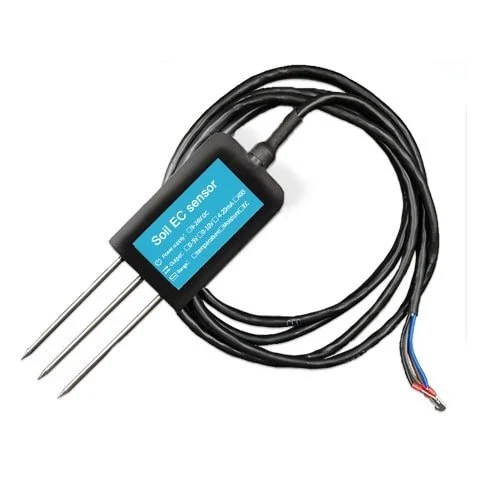
Soil Sensor JXBS-3001-EC-RS
Price: ₹4,500.00 per pieces
Estimated Total Amount: ₹4,500.00

| Brand | JXCT |
| Part Number | JXBS-3001-EC-RS |
| Temperature Range | -40degC-80degC |
| Temperature Accuracy | 0.5degC |
| Temperature resolution | 0.1degC |
| Water measurement range | 0-100% |
| Water resolution | 0.10% |
| Conductivity resolution | 10us/cm |
Soil Sensor JXBS-3001-EC-RS
Soil Sensor JXBS-3001-EC-RS is the soil EC moisture temperature triple sensor is suitable for soil temperature and moisture measurements and total soil salt (electrical conductivity). The three-in-one sensor of the soil creatively measures salinity, moisture, and temperature, which greatly facilitates the evaluation of soil conditions by the customer’s system. Compared with the German original high-precision sensor and the actual soil drying and weighing method calibration, high precision, fast response, stable output. Less affected by soil salt content, suitable for all kinds of soil. Can be buried in soil for a long time, resistant to long-term electrolysis, corrosion resistance, vacuum potting, completely waterproof.
Methods of Testing
Precautions
Application
No reviews yet. Be the first to review this product.
Login to ask a question.
Sensors play a crucial role in promoting sustainability in agricultural farming. By providing real-time data and insights, sensors enable farmers to make informed decisions, optimize resource usage, and enhance productivity while minimizing environmental impact. Here are some ways in which sensors contribute to agricultural sustainability:
Precision Agriculture: Sensors, such as soil moisture sensors, weather sensors, and crop health sensors, enable precision agriculture techniques. Farmers can gather data on soil moisture levels, temperature, humidity, and crop conditions, allowing them to precisely apply water, fertilizers, and pesticides only where and when needed. This helps reduce resource wastage and prevents over-application of chemicals.
Water Management: Water scarcity is a significant concern in agriculture. Sensor technologies like moisture sensors and evapotranspiration sensors help farmers monitor soil moisture levels and calculate crop water requirements accurately. This information enables efficient irrigation practices, avoiding water overuse and minimizing water runoff.
Nutrient Management: Sensors assist in monitoring soil nutrient levels and plant nutrient requirements. Farmers can use sensors to measure soil nutrient content, such as nitrogen, phosphorus, and potassium, and tailor fertilizer applications accordingly. By optimizing nutrient management, farmers can reduce excess fertilizer use, prevent nutrient leaching, and minimize the environmental impact caused by nutrient runoff into water bodies.
Pest and Disease Management: Sensors equipped with imaging technologies and artificial intelligence algorithms can detect early signs of pest infestations or plant diseases. Early identification allows farmers to target specific areas or plants for treatment, reducing the need for broad-scale pesticide application. This targeted approach minimizes chemical usage, prevents unnecessary environmental contamination, and promotes ecological balance.
Energy Efficiency: Sensors also contribute to energy efficiency on farms. For instance, sensors can monitor energy consumption in farm equipment and buildings, enabling farmers to identify areas for energy optimization and reduce waste. Additionally, sensors can be used in smart grid systems to monitor and regulate energy usage in irrigation pumps and other agricultural machinery, ensuring efficient energy allocation.
It is important to note that the sustainability of sensor technology in agriculture depends on several factors. These include the energy requirements of sensors, the materials used in their production, the longevity and maintenance requirements of sensors, and the responsible disposal or recycling of sensor components. Continuous advancements in sensor technology are being made to address these considerations and improve their sustainability.
Overall, when used appropriately, sensors have the potential to significantly enhance agricultural sustainability by reducing resource consumption, optimizing inputs, and minimizing the negative environmental impacts associated with farming practices.
No offers available for this product at the moment.
Contact the vendor for bulk order pricing: SourcewellDevicesPrivateLimited
Please contact the vendor directly for their specific return and shipping policies.
For any inquiries, contact us at info@cleantech-mart.com